10 Essential ATV Accessories Every Off-Road Rider Should Own

10 Essential ATV Accessories Every Off-Road Rider Should Own

10 Essential ATV Accessories Every Off-Road Rider Should Own

An ATV can be remarkably capable straight from the factory, but spending enough time off-road quickly reveals the difference between an ATV that simply runs and one that is genuinely prepared for the trail.

The best ATV accessories aren’t necessarily the flashiest upgrades. They’re the pieces of equipment that solve real problems: getting unstuck from a mud hole, protecting the underside from an unexpected rock, carrying tools without losing them on the trail, repairing a puncture miles from the truck, or simply seeing where you’re going after sunset.

That approach is reflected in recommendations from major ATV manufacturers and experienced off-road sources. Polaris, for example, includes handguards, storage, winches, skid plates, lighting and tires among its priority ATV modifications. Can-Am’s trail-preparation guidance goes even further, recommending recovery equipment, tire-repair equipment, tools, emergency supplies and spare components.

So rather than filling this guide with cosmetic add-ons, we’ve concentrated on 10 ATV accessories that can actually make an off-road machine safer, more useful and better prepared for difficult terrain.
1. ATV Winch — The Accessory You Don’t Appreciate Until You’re Stuck

A winch would be near the top of my upgrade list for almost any ATV that’s regularly taken into mud, snow, steep terrain or remote trails.

You might ride for months without touching it. Then one afternoon the rear wheels disappear into a muddy rut and suddenly the winch becomes the most valuable accessory bolted to the machine.

A front-mounted electric winch can be useful for self-recovery, assisting another vehicle, moving obstacles and certain utility jobs around a property.

Can-Am similarly recommends carrying an appropriate recovery rope or having a winch available when riding in terrain where getting stuck is possible, while Polaris includes winches among its essential ATV upgrades.

What should you look for in an ATV winch?

Don’t buy solely according to the biggest number printed on the box. Consider your ATV’s weight, intended use, mounting compatibility, electrical system and the manufacturer’s recommended capacity.

Synthetic rope is attractive for many recreational riders because it’s light and easier to handle than steel cable, although it still needs proper care and inspection.

Also remember that owning a winch and knowing how to recover a vehicle safely are two different things. Learn correct anchor, rigging and recovery procedures before you actually need them.

Best for: mud riders, hunters, utility ATV owners and riders exploring remote trails.


2. A Proper Cargo or Storage Box

ATV racks are useful. A secure storage box is better.

Think about everything you might eventually carry:

  • First-aid kit
  • Tire repair equipment
  • Small tool roll
  • Tow/recovery strap
  • Gloves
  • Water
  • Snacks
  • Rain gear
  • Flashlight
  • Spare parts
  • Portable jump starter

Leaving all of that loosely strapped to an exposed rack isn’t ideal.

A weather-resistant front or rear cargo box keeps equipment organized and offers considerably better protection from mud, water, branches and trail debris.

Polaris specifically highlights additional storage as one of its recommended ATV modifications and also promotes rack extenders and cargo solutions for riders who need to carry equipment.

Look for strong latches, water resistance, secure mounting and enough clearance that the box doesn’t interfere with normal riding position.

A useful rule: don’t automatically buy the biggest box available. Buy enough storage for the equipment you genuinely carry.


3. LED Light Bar or Auxiliary Lighting

Factory ATV headlights are sufficient for many situations, but off-road riding after sunset is very different from driving along an illuminated street.

Trails contain shadows, sudden turns, fallen branches, ruts, animals and elevation changes. Additional lighting can substantially improve how much of that terrain you can see.

Polaris includes upgraded lighting among its recommended ATV modifications and highlights lighting alongside winches and rack equipment for utility-focused Sportsman setups.

A quality LED setup can provide additional forward or peripheral illumination without requiring an enormous fixture.

But brighter isn’t automatically better.

Pay attention to:

Beam pattern: spot beams throw light farther down the trail; flood beams illuminate a wider area.

Mounting position: poorly positioned lights can create glare.

Electrical demand: make sure the ATV’s charging system can support your setup.

Water and dust resistance: especially important on machines that routinely encounter mud and water.

Best for: night riders, hunters, farmers and anyone who regularly returns from a ride after sunset.


4. Tire Repair Kit + Portable Air Compressor

If I could put only a handful of emergency items into an ATV cargo box, a tubeless tire repair kit and compact inflator would make the cut.

ATV tires deal with sharp rocks, sticks, roots and other trail debris. A puncture that would be a minor inconvenience at home can become a major problem several miles into the backcountry.

Can-Am specifically recommends carrying tire plugs and, particularly for longer or remote rides, an air compressor.

A useful trail kit normally includes plugs suitable for your tire type, insertion and reaming tools, a compact inflator or another appropriate inflation solution, a pressure gauge and the small tools required to access the wheel if necessary.

A plug is not a magic solution for every damaged tire. Severe sidewall cuts, damaged beads and major structural damage can require proper tire replacement or professional repair.

But for an ordinary repairable tread puncture, having the equipment with you can make the difference between riding back and walking back.


5. Skid Plates and Underbody Protection

ATVs are built for rough terrain, but that doesn’t make everything underneath them indestructible.

One badly placed rock or stump can strike vulnerable components beneath the machine.

That’s why underbody protection is one of those upgrades that may never look particularly exciting on Instagram but makes tremendous sense in the real world.

Polaris includes body armor and skid plates among its top ATV modifications.

Skid protection can help shield vulnerable areas from direct contact with rocks, logs and other obstacles.

When shopping, check exactly what the kit protects. Some products provide only limited central protection, while more comprehensive systems cover a greater portion of the underside.

Material also matters. Different designs use metals or tough polymers, each with trade-offs involving weight, impact resistance, noise and how easily the ATV slides across obstacles.

Best for: rocky terrain, technical trails, wooded routes and riders who frequently encounter hidden obstacles.


6. Handguards — Small Upgrade, Big Difference

Handguards are easy to underestimate.

Ride through a narrow wooded trail and you’ll understand them immediately.

Branches and brush can strike your hands, levers and handlebar controls. Handguards create an additional barrier between those obstacles and the rider.

Polaris places handguards second on its list of top ATV modifications.

They can also reduce some of the wind hitting your hands during cold-weather riding.

For riders who use their ATV throughout winter, combining handguards with heated grips or thumb warmers can make cold-weather riding considerably more comfortable. Heated hand and thumb warmers are another modification highlighted by Polaris.

Just make sure the guards are compatible with your bars, controls and brake levers.


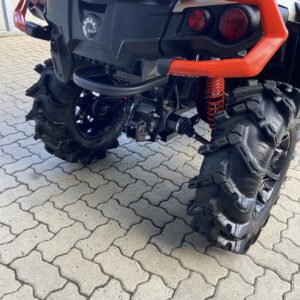
7. Tires Matched to Your Terrain

Sometimes the best ATV accessory isn’t something you bolt onto a rack.

It’s what connects the machine to the ground.

Tires influence traction, steering feel, braking, flotation and how confidently the ATV behaves in difficult terrain. Polaris includes both tires and wheels among its recommended ATV modifications.

The mistake is assuming there’s one “best ATV tire.”

There isn’t.

Mud

Deep, widely spaced lugs help clear mud and find traction.

Rocks and hardpack

A more appropriate trail-oriented construction and tread pattern can provide better predictability and durability.

Mixed recreational riding

An all-terrain pattern is usually more sensible than choosing an extreme mud tire simply because it looks aggressive.

Snow and soft terrain

Your priorities change again, with flotation and traction becoming particularly important.

Before changing tire size, check manufacturer specifications and understand the consequences. Oversized tires can alter gearing, steering effort, clearance and loads on drivetrain components.

The most aggressive tire isn’t necessarily the best tire. Match the tire to where you actually ride.


8. GPS/Phone Mount and Reliable Navigation

Getting lost doesn’t require being hundreds of miles into the wilderness.

A network of unfamiliar trails with similar-looking intersections can do the job surprisingly quickly.

A sturdy GPS or phone mount keeps navigation visible without requiring the rider to dig through a pocket every time the trail splits.

For remote riding, however, don’t make your entire navigation plan dependent on cellular service.

Download offline maps when appropriate and consider dedicated GPS equipment for serious backcountry trips. Carrying backup power is useful as well; Can-Am recommends a compact jump starter/power pack as part of its off-road essentials because it can provide vehicle and USB backup power.

Polaris also incorporates navigation into its off-road ecosystem through RIDE COMMAND, highlighting its use for navigation and managing locations.

Your phone mount should be:

Vibration resistant • secure • weather appropriate • easy to see without obstructing controls

And remember: navigation equipment should help you ride—not distract you from the trail.


9. Tool Kit + Trail-Side Emergency Gear

A tool kit doesn’t make your ATV faster.

It can make a broken ATV mobile again.

Can-Am’s experienced-rider trail checklist recommends carrying tools for minor repairs along with a first-aid/emergency kit. It also suggests items such as a spare drive belt and compact jump starter depending on the machine and trip.

Instead of carrying an enormous garage toolbox, build a compact kit around your specific ATV.

Consider the fastener sizes actually used on your machine and the repairs you’re realistically capable of performing on the trail.

Useful items may include basic wrenches/sockets, screwdrivers or bits, pliers, zip ties, electrical tape, a flashlight and machine-specific spare components.

And keep repair equipment separate from human emergency equipment. A first-aid kit deserves a permanent place on an ATV used in remote areas.


10. Proper Rider Protection

Here’s the accessory category that matters more than every performance modification above:

the equipment protecting the rider.

A $1,000 accessory package on the ATV doesn’t compensate for riding without appropriate protective gear.

The U.S. Consumer Product Safety Commission recommends a DOT and/or Snell-certified helmet and says ATV riders should also use goggles, gloves, long pants, a long-sleeved shirt and over-the-ankle boots. It also recommends hands-on ATV training.

Can-Am likewise puts a quality DOT-approved helmet first on its list of essential riding equipment and emphasizes eye protection.

This isn’t simply theoretical advice. CPSC estimates that 94,700 OHV-related injuries were treated in U.S. hospital emergency departments in 2022, with ATVs accounting for the large majority of OHV injuries in its five-year dataset.

CPSC also advises riders to stay off paved roads except permitted crossings, avoid alcohol before or during operation, use age-appropriate machines, and never carry more people than the ATV is designed for.


What Should You Buy First?

If you’ve just purchased an ATV, you absolutely don’t need to order ten accessories on day one.

I’d prioritize them according to risk and riding conditions.

For a recreational trail rider, start with proper protective gear, tire-repair/inflation equipment, emergency supplies and basic tools. If you regularly tackle mud, snow or isolated terrain, a winch and recovery equipment move very high on the list. Rocky-trail riders should consider underbody protection, while hunters and utility riders will probably get immediate value from weather-resistant storage and auxiliary lighting.

That produces a more capable ATV without wasting money on modifications that don’t match how you actually use it.

Bonus Accessories Worth Considering

Once the essentials are covered, there are plenty of worthwhile upgrades.

A windshield can make long or cold rides more comfortable. Heated grips become extremely valuable in winter. Rack extenders increase carrying capacity. A plow can transform an ATV into a useful winter machine. Bumpers can add protection in demanding environments.

The point isn’t to install everything.

It’s to build the ATV around your terrain, climate and riding style.

ATV Accessory Mistakes to Avoid

One of the biggest mistakes is buying an accessory first and checking compatibility second. Model year, trim, rack design, electrical capacity, mounting points and tire clearance can all affect whether an upgrade actually works.

Another mistake is choosing purely on price. Recovery equipment, protective equipment and safety-related accessories aren’t areas where a poorly manufactured bargain is necessarily a bargain.

Finally, don’t overload the ATV. Accessories, cargo and equipment all add weight. Stay within the manufacturer’s load, rack and towing limits for your specific machine.

Final Thoughts: Build a Smarter ATV, Not Just a More Modified One

The best ATV setup isn’t necessarily the one with the longest accessories list.

It’s the machine whose owner has thought about what could realistically happen during a ride.

Can I recover the ATV if I get stuck?

Can I repair a simple puncture?

Can I navigate without cell service?

Can I carry essential tools and emergency equipment?

Is the underside protected for the terrain I’m riding?

Am I wearing appropriate protective equipment?

Answer those questions first. The cosmetic modifications can come later.

A carefully chosen winch, secure storage box, auxiliary lighting, tire repair kit, skid protection, handguards, terrain-appropriate tires, navigation equipment, trail tool kit and proper riding gear can turn an ordinary ATV into a far more prepared off-road machine.

And ultimately, that’s what a useful accessory should accomplish: not simply change how your ATV looks, but improve what you and the machine can safely handle when the easy trail ends.

Author profile

Alex Carter — Powersports & Off-Road Contributor

Alex writes practical buyer guides covering ATVs, snowmobiles, electric dirt bikes and recreational powersports equipment, with an emphasis on equipment selection, ownership and trail preparation.

Research note: This article was independently written and cross-checked against recommendations from Polaris, Can-Am and U.S. CPSC ATV-safety resources rather than simply reproducing another site’s accessory list.
Browse our collection of ATVs for sale online