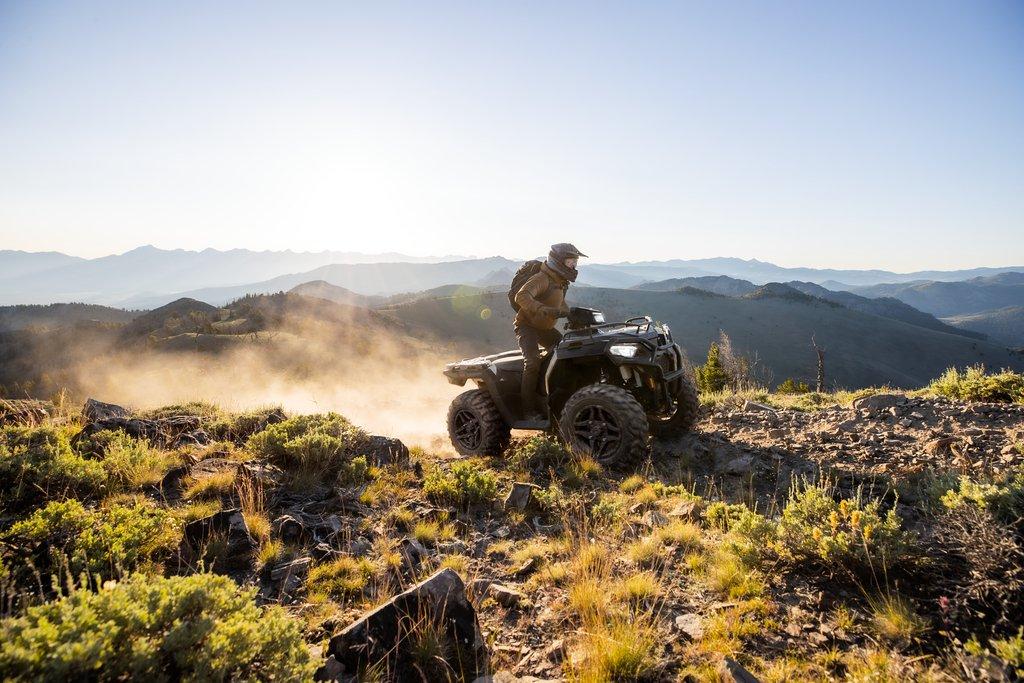
Owning an ATV opens the door to muddy trails, rocky climbs, forest routes, hunting trips and backcountry adventures that ordinary vehicles simply cannot handle. But taking a stock ATV deep into the trail without the right equipment can turn an enjoyable ride into a difficult recovery mission.
The best ATV accessories are not simply cosmetic upgrades. Good accessories improve rider protection, vehicle recovery, navigation, cargo organization and your ability to deal with unexpected mechanical problems.
Current guidance from Can-Am recommends carrying items such as tire plugs, an air compressor and a compact battery jump starter for off-road trips. Polaris’ current accessory range places similar emphasis on storage, protection, winches, recovery equipment, lighting and navigation.
If you are building your first trail kit—or upgrading an ATV you already own—these are the 10 essential ATV accessories every off-road rider should seriously consider.
Before installing anything on the ATV, protect the rider operating it.
A quality motorcycle or ATV helmet should be considered essential rather than optional. The ATV Safety Institute recommends wearing a motorcycle helmet, eye protection, gloves, boots, long pants and a long-sleeved shirt or jacket whenever operating an ATV.
The U.S. Consumer Product Safety Commission gives similar recommendations and advises ATV riders to use helmets, eye protection, boots, gloves and protective clothing.
For U.S. riders, the ATV Safety Institute specifically recommends a DOT-compliant helmet.
Do not choose your helmet purely by appearance. Correct fit matters enormously. It should sit securely without excessive movement and should always be properly fastened.
Protective gear may not make your ATV faster, but it is arguably the most important ATV accessory investment you can make.
A winch is one accessory you may rarely need—but when you need it, you will be extremely happy it is there.
Mud, snow, steep inclines, loose sand and fallen obstacles can stop even highly capable four-wheel-drive ATVs.
Polaris currently lists winches as a major off-road accessory category, alongside dedicated recovery equipment.
A correctly sized winch can help pull your ATV from:
However, the winch itself is only part of a useful recovery setup.
Consider carrying:
Do not improvise recovery equipment with ordinary household ropes or unsuitable tie-down equipment.
A recovery system is only as safe as the weakest component in it, so pay attention to equipment ratings and follow the winch manufacturer’s operating instructions.
Learning how to perform a controlled recovery at home is also much easier than trying to understand your winch for the first time while the ATV is buried halfway into a mud hole.
A small nail, sharp rock or hidden branch can end an ATV ride surprisingly quickly.
That makes a tire plug kit and portable air compressor two of the smartest accessories you can carry.
Can-Am recommends tire plugs as a compact way of dealing with certain trail punctures and specifically recommends carrying an air compressor when taking longer trips or traveling through remote areas.
A basic ATV tire repair kit should contain:
One detail ATV owners sometimes overlook is the pressure gauge.
ATV tires generally operate at much lower pressures than passenger-car tires, so you want a gauge capable of reading low tire pressures accurately.
A plug can be useful as a temporary trail repair for an appropriate tread puncture, but severe sidewall damage, large cuts or structural tire damage may require tire replacement.
The goal of a trail repair kit is often simply to get the ATV safely back to camp, the trailer or a place where a permanent repair can be performed.
You do not need to carry an entire toolbox on every ride.
You do need enough equipment to repair common trail problems.
A powersports dealer guide from Bright Power Sports similarly recommends carrying trail tools such as wrenches, a tire pressure gauge, air pump or compressor, zip ties and locking pliers.
Instead of buying a huge generic kit, build one around your specific ATV.
Spare components can also make sense depending on your machine.
For example, owners of belt-driven CVT ATVs may choose to carry a spare drive belt, particularly during long-distance or remote rides.
You should also know where important components are located before leaving home.
There is little benefit in carrying the perfect spare part if you have never practiced removing the damaged component it replaces.
A useful test is simple: perform basic maintenance on your ATV using only your trail toolkit. Anything you repeatedly need from the garage should probably be considered for your trail kit.
ATV preparation should not focus entirely on the machine.
The rider may need assistance too.
A compact first-aid kit should travel with you whenever you venture away from immediate medical help.
Your kit does not have to resemble an ambulance, but it should be adequate for common minor injuries until professional help can be reached.
Consider including:
Bring enough drinking water as well.
Remote ATV riding can involve long delays if a machine becomes disabled, and weather conditions can make relatively minor situations much more serious.
Your emergency equipment should therefore reflect where you ride.
A desert rider may need considerably more water and heat protection. Someone riding mountain trails may need additional insulation because temperatures can change rapidly.
Carrying first-aid equipment is useful. Knowing basic first aid makes it much more valuable.
Once you start carrying tools, first-aid supplies, food, rain gear and recovery equipment, you need somewhere safe to put everything.
Loose equipment should not simply bounce around on an ATV rack.
A properly mounted ATV cargo box or rack bag protects your belongings from:
Polaris currently categorizes storage as one of its primary Sportsman ATV accessory areas, alongside protection, utility and other trail equipment.
Hard cargo boxes work particularly well for tools and heavier equipment because they provide good physical protection.
Soft storage bags can be lighter and easier to remove.
Many riders benefit from using both: a larger rear box for emergency equipment and a smaller quick-access bag for frequently used items.
Whatever system you choose, remember that your ATV has manufacturer-specified cargo and payload limits.
Adding 50 pounds of equipment simply because it fits inside the box does not necessarily mean the ATV should carry it.
Keep heavier items secure and as sensibly positioned as possible.
Remote trails are exactly where phone reception is least reliable.
That is why navigation deserves a place among the best ATV accessories for serious trail riders.

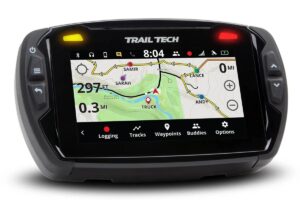
Garmin’s current off-road mapping platform supports features including topographic maps, contour lines, satellite imagery and adventure roads/trails on compatible devices and services.
A dedicated off-road GPS has several potential advantages:
However, recreational riders do not necessarily need to purchase a dedicated GPS immediately.
A securely mounted smartphone with downloaded offline maps may work well for established riding areas.
The critical point is to download everything before leaving cellular coverage.
Do not assume your mapping application will continue loading new information once you are miles inside a forest.
A GPS also should not be confused with emergency communication.
Navigation tells you where you are.
It does not necessarily allow you to contact help.
Riders heading deep into remote areas may want to consider a compatible satellite communication or emergency device in addition to navigation equipment.
The top of your ATV may look tough, but many important components live underneath it.
Rocks, tree roots, branches and trail debris can strike areas such as the:
Polaris sells dedicated arm guards and skid plates as part of its current off-road protection lineup.
SuperATV also describes skid plates as an important aftermarket upgrade for protecting the machine during off-road use.
Factory protection varies considerably between ATVs.
For light recreational trail riding, factory protection may be adequate.
But riders who frequently travel through rocky terrain, deep ruts or heavily wooded trails should consider stronger underbody protection.
Materials commonly used include aluminum and various high-strength plastics.
Aluminum provides excellent impact resistance, while quality polymer designs can slide over obstacles with less noise and relatively low weight.
The ideal choice depends on the ATV and the terrain.
Protection is much cheaper than replacing damaged engine or drivetrain components after landing directly on a sharp rock.
A daytime trail ride does not always finish during daylight.
Mechanical delays, recoveries, route changes and simply traveling farther than expected can leave you returning after sunset.
Polaris includes LED lights and light bars among its current ATV accessory categories.
Auxiliary lighting can improve visibility during:
Consider smaller LED pods if you want additional side illumination, or a quality light bar if you need broader forward coverage.
Do not automatically choose the most powerful light available.
You need appropriate beam placement more than raw output.
Poorly positioned lights may reflect off the ATV’s hood, dust, fog or snow and actually reduce visibility.
Electrical installation matters too.
Use proper switches, weather-resistant connectors and fusing, and ensure your ATV’s charging system can handle the additional load.
And remember that extra lighting does not make an ATV suitable for normal paved-road use.
CPSC advises riders that ATVs are primarily designed for off-road terrain and warns against riding them on paved public roads except when crossing where permitted.
Modern ATVs rely heavily on electrical systems.
A battery that cannot crank the engine could leave you stranded far from the trailer.
Can-Am recommends carrying a compact battery jump starter as part of an off-road riding kit.
A portable jump pack becomes even more valuable on an ATV fitted with electrical accessories such as:
Many lithium jump starters can also charge smartphones and other USB electronics.
That gives you two useful systems in one compact piece of equipment.
Choose a jump starter appropriate for your ATV engine and keep it charged.
There is nothing particularly useful about carrying an emergency battery pack that has been sitting empty inside your cargo box for eight months.
Check its charge before longer rides.
A separate USB power bank is also inexpensive insurance for keeping a phone or navigation device running.
Once the ten essentials above are covered, you can tailor your ATV accessories to your particular riding style.
This is where accessorizing your ATV becomes personal.
Buy equipment for the riding you actually do—not simply because another ATV owner has it.
If your budget is limited, prioritize safety and getting home.
A sensible order is:
You can rearrange that order based on terrain.
A rider regularly tackling mud may place the winch near the top. Someone riding miles into remote mountain trails may prioritize GPS and communication equipment.
What matters is that your first purchases solve genuine safety or reliability problems.
Accessories cannot compensate for an ATV that has not been maintained.
Before leaving for a trail ride, check:
CPSC also recommends hands-on ATV training and reminds riders that most ATVs are designed for one rider unless specifically manufactured with additional seating.
The best ATV accessories are not necessarily the accessories that attract the most attention in the parking lot.
They are the accessories you are grateful to have when something goes wrong twenty miles down the trail.
A quality helmet protects the rider. A winch gets the ATV unstuck. A tire kit turns a puncture into a temporary inconvenience. Tools allow small repairs. GPS helps keep you on course. Skid plates protect expensive components, while good storage ensures everything you need arrives with you.
Start with protection and emergency equipment before spending heavily on cosmetic upgrades.
Once those essentials are covered, you can build an ATV specifically suited to muddy trails, hunting, farm work, mountains, snow or long-distance adventure riding.
Prepare properly, know your machine and carry equipment you actually know how to use. That combination will do far more for your off-road experience than simply bolting every available accessory onto your ATV.